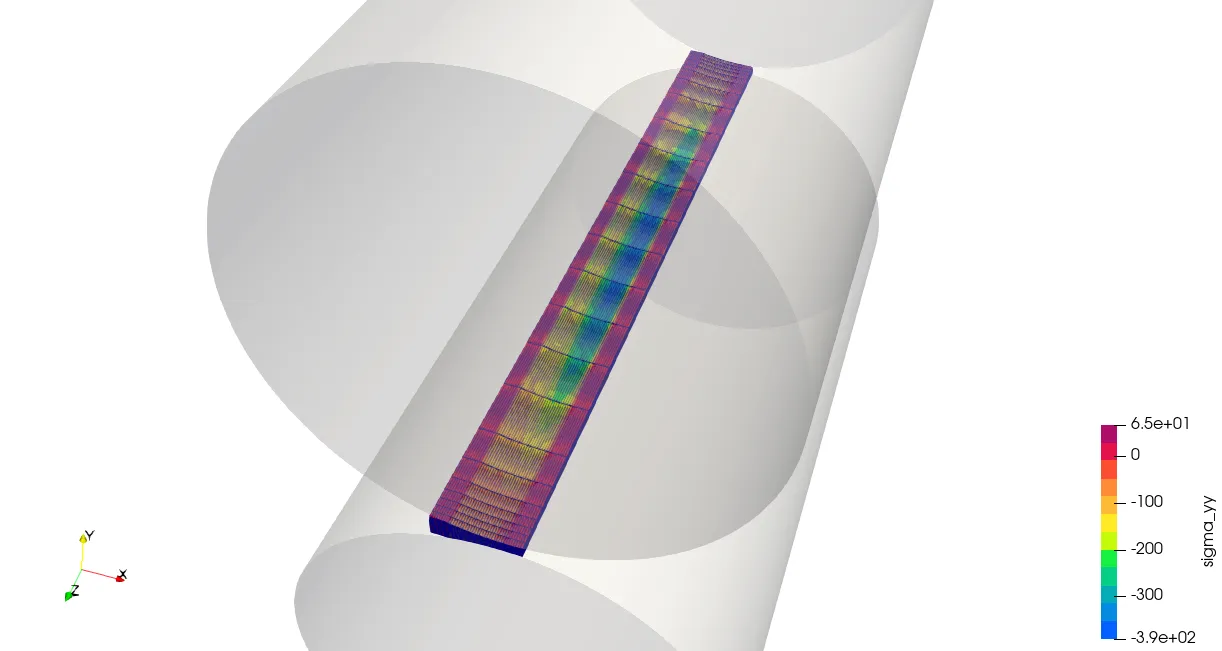
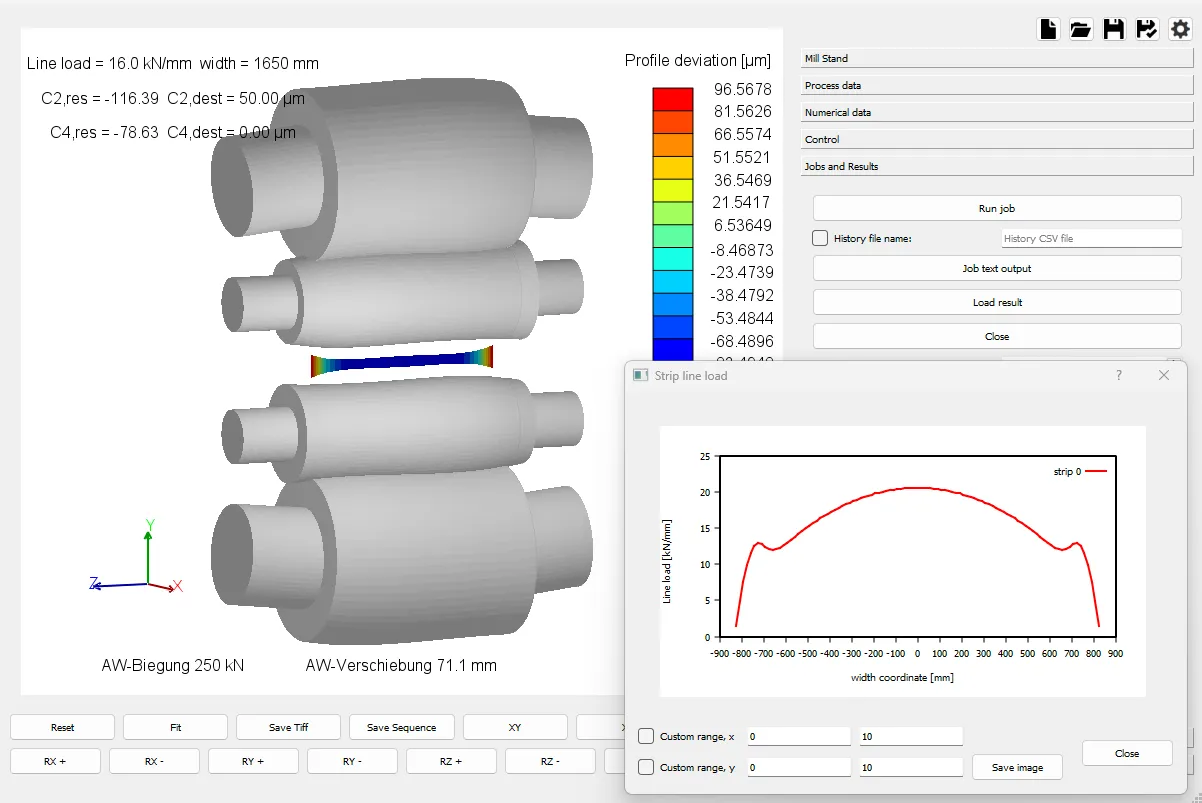
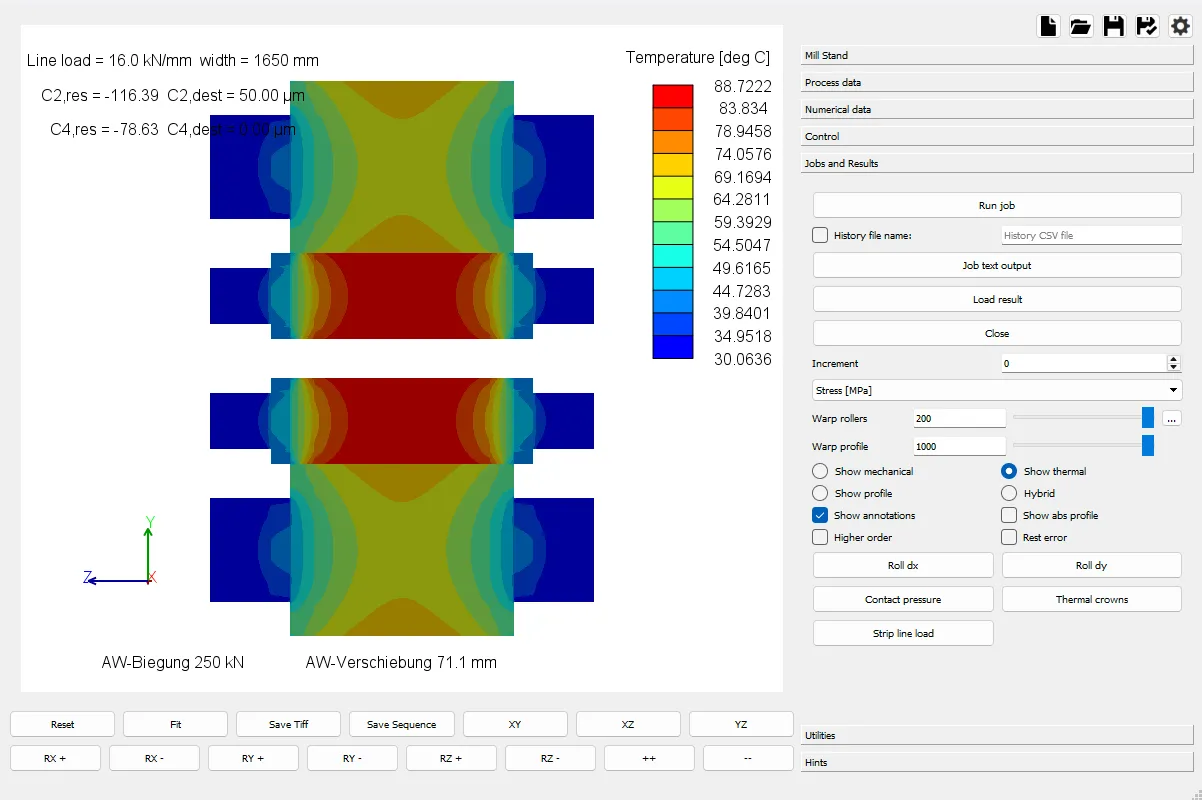
Since allpccloud GmbH was founded, we have been developing high-quality software models for flat rolling processes. These include both FEM-based algorithms for plastic deformation in the rolling gap as well as the profile and flatness behavior resulting from the springback of the roll set. The latter requires precise control of the flatness actuators to ensure a uniform mass flow across the width. Our methods cover the entire thickness spectrum, from heavy gauge to thin sheet.
We are particularly proud of our collaboration with our partner companies:
Cold rolling
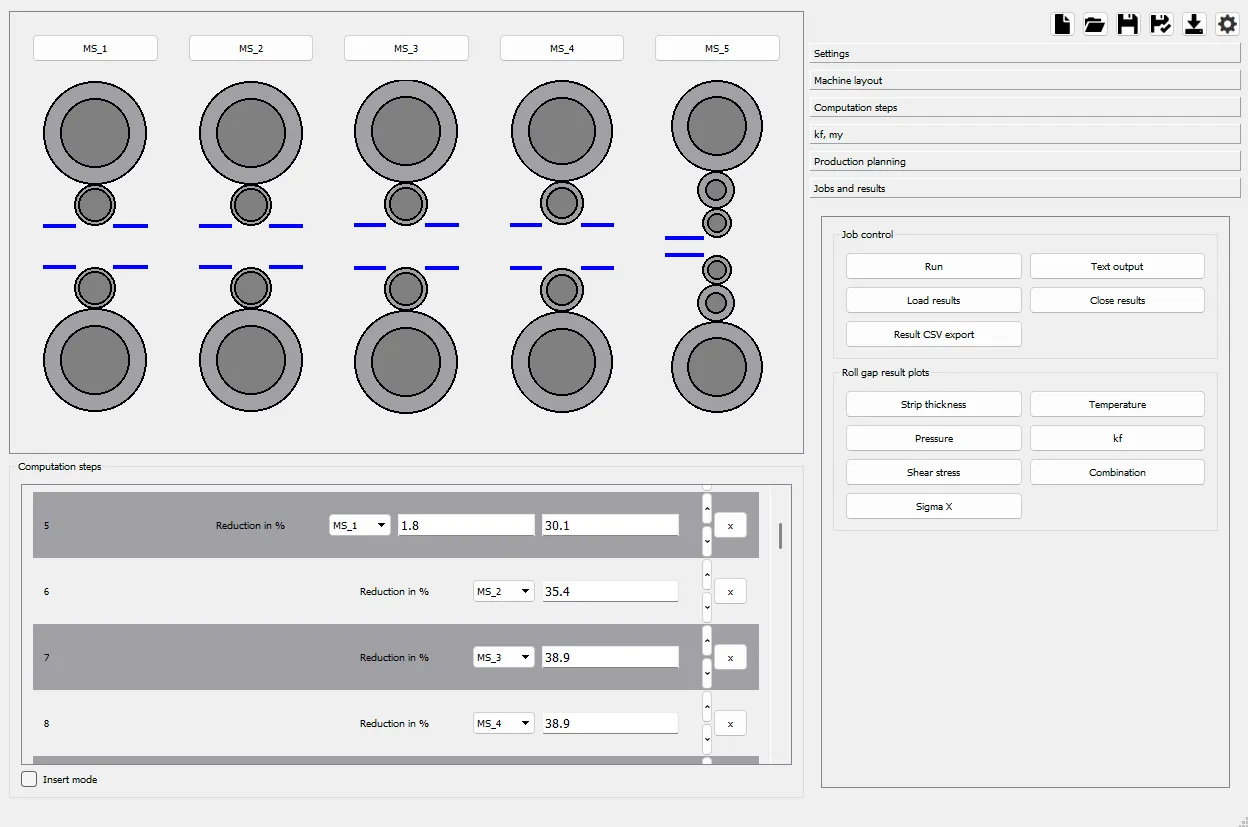
In cold rolling, it is particularly important to control the flatness settings while simultaneously ensuring reliable adjustment of the desired cold-rolled strip thickness. The trend is toward higher material strengths with thinner final thicknesses, especially in the product group of electrical steel grades (silicon-alloyed steels).
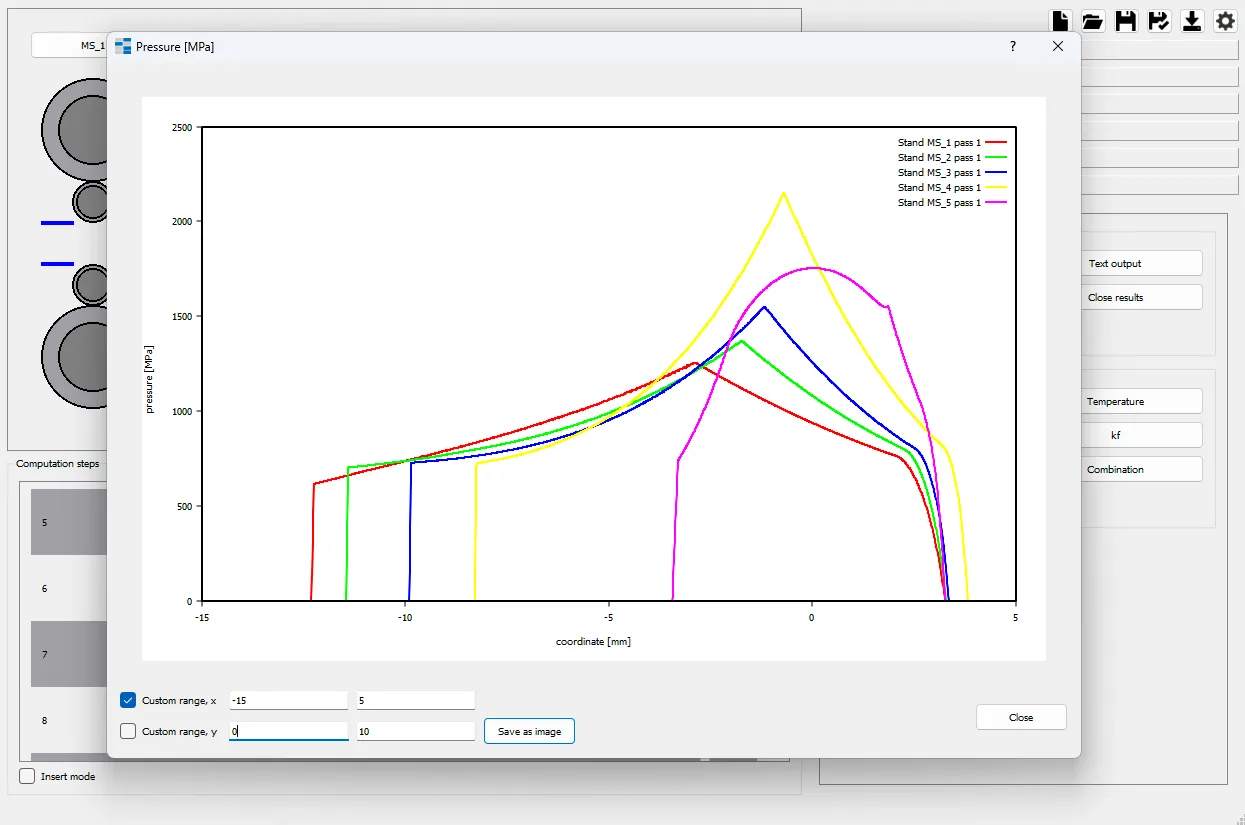
Our simulation software is capable of accurately predicting the required force and energy demand during cold rolling. Particularly with thin strip thicknesses in the final pass, this requires highly sophisticated numerical methods, because elastic deformation components account for a large proportion of the required process forces. As the first provider of such software, we use GPUs to simulate this complex elastic-plastic mechanical problem in just a few seconds – fast and reliable enough for automation software.
Hot rolling
In hot rolling, particular attention must be paid to profile development in the roughing and finishing stands. The transverse flow in the rolling gap, which is still clearly noticeable at greater strip thicknesses, leads, on the one hand, to a significantly more complex stress state in the strip; on the other hand, however, it ensures that the strip profile can still be modified, at least in the front stands.
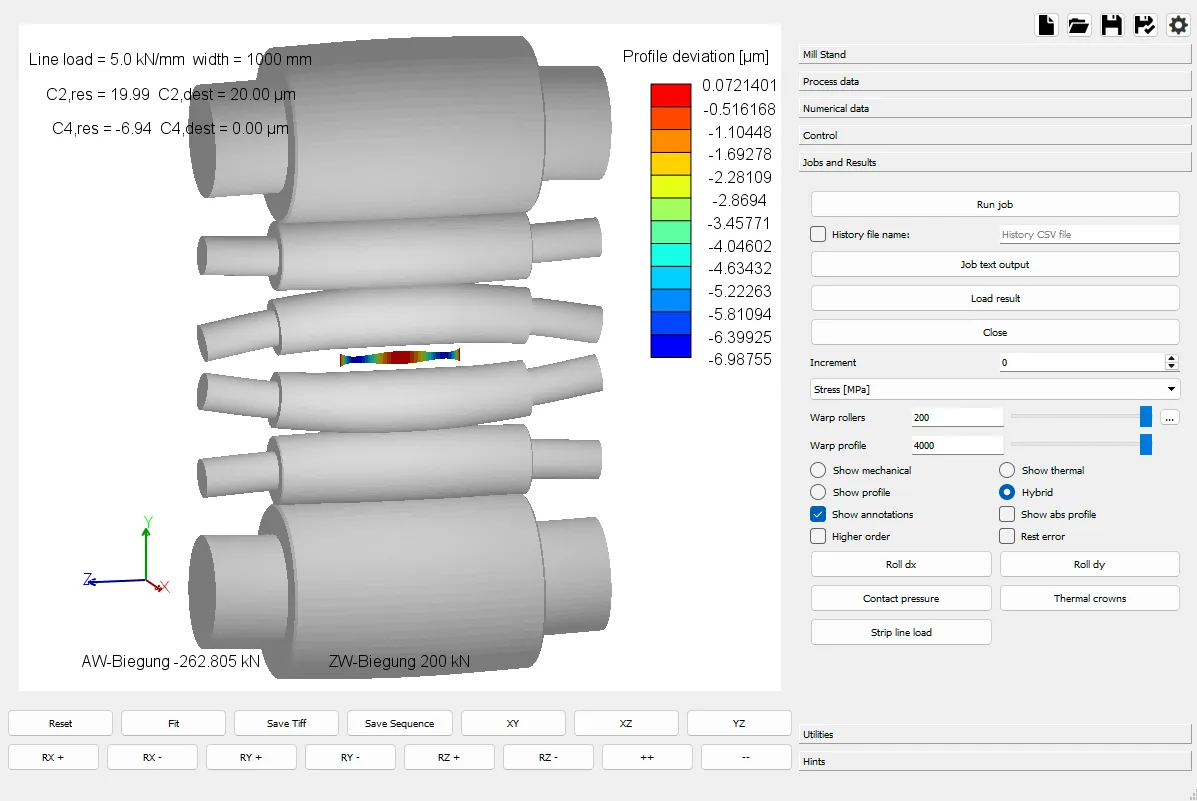
Our software is capable of fully simulating the forming process in the rolling gap in 3D. This allows us to determine how the line load distribution behaves in the rolling gap and how the rolling gap must be pre-controlled. Other factors taken into account include the thermal state of the roll set and roll wear.